Games Federation
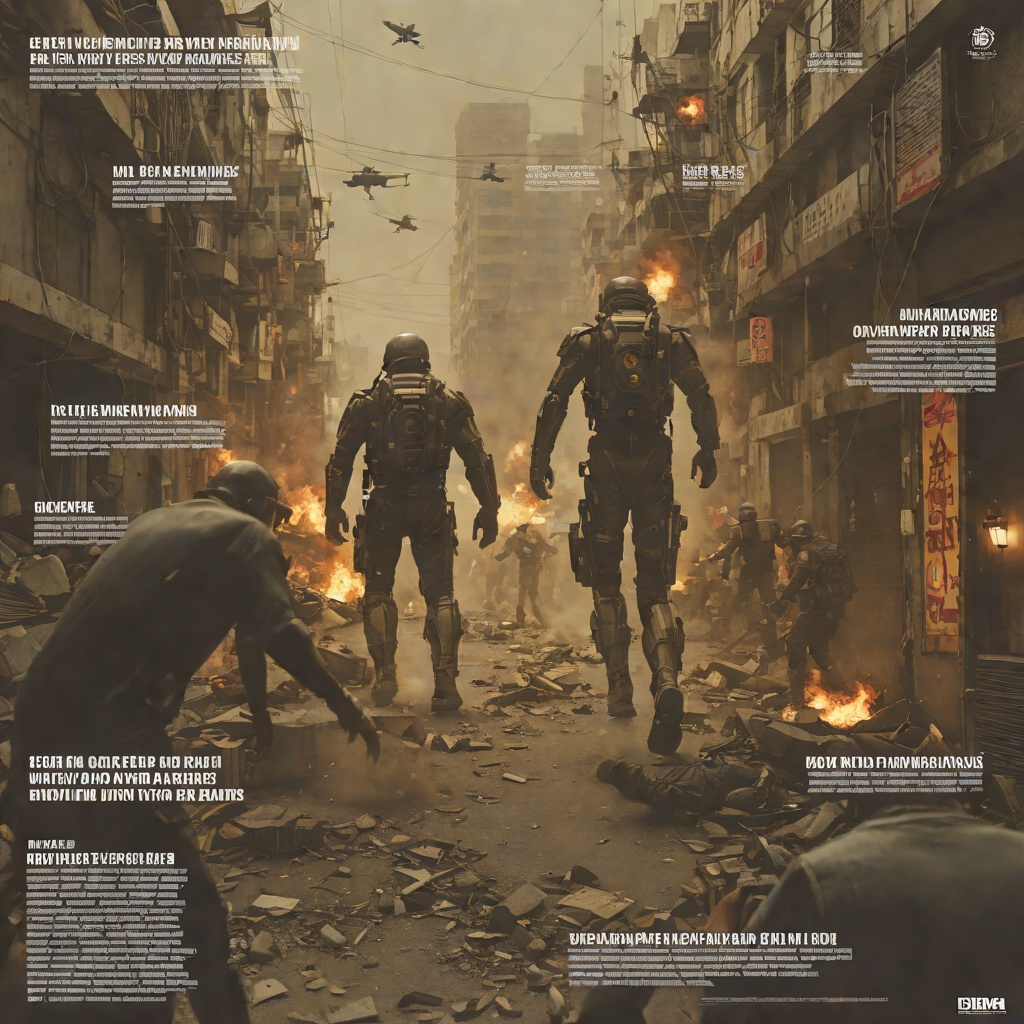
The Running ManGames Federation is the governing institution of The Running Man, the organization that turns Ben Richards’s desperation and flight into a marketable national spectacle. It does not merely broadcast a chase. Through contracts, clocks, rewards, informants, cameras, Hunters, police authority, and the power to interrupt scheduled programming, it makes human survival into a regulated game whose violence can be watched, priced, and sold.
Nature and Institutional Reach
Games Federation presents itself as an entertainment authority, but its reach extends well beyond television. Dan Killian tells Ben Richards that the organization can authorize his apprehension and execution, while Evan McCone later identifies the Federation as the source of a sworn bill for Richards’s capture and death. The Federation is also described as an accredited arm of the Network Communications Commission, placing its games within the same administrative structure that governs mass communication. Its authority therefore combines commercial spectacle with legal and coercive power: the contestant is simultaneously a performer, a fugitive, and a target sanctioned by the state.
The organization’s cultural power depends on the Free-Vee. Richards recognizes that the Network’s influence rests on the public assumption that whatever appears on television must be true. The Federation exploits that assumption by controlling what viewers see, when they see it, and which version of an encounter becomes the official account. Its power is consequently not limited to physical pursuit. It also determines the frame through which pursuit is understood, presenting a hunted man as a contestant and institutional violence as entertainment.
Rules, Rewards, and Surveillance
The Federation’s most important achievement is to make danger calculable. Richards receives a twelve-hour head start and is promised one hundred New Dollars for every hour he remains free, with forty-eight hundred dollars advanced as running money on the expectation that he can evade the Hunters for forty-eight hours. Any unused portion is refundable if he is caught earlier, while surviving for thirty days earns the Grand Prize of one billion New Dollars. The rules thus translate time, exhaustion, and continued existence into financial units, while extending the promised benefit to Richards or his surviving family.
The game also requires continual production of evidence. After leaving the studio, Richards is given a compact tape machine weighing six pounds and sixty tape clips, each about four inches long. The equipment is designed to fit inside a coat pocket, allowing the Federation to turn the fugitive’s movements and statements into daily broadcast material. He must deposit two clips per day in a mailslot for express delivery and editing; failure to do so constitutes legal default of payment. The requirement makes the contestant perform two kinds of labor at once: he must evade capture in the physical world while supplying the media institution with the material that keeps the spectacle alive.
Surveillance is distributed through the public. The Federation offers an 800 number for anyone who spots Richards, paying one hundred New Dollars for a verified sighting and one thousand for a sighting that results in his death. Independent cameramen receive ten dollars a foot and upward for usable footage. The resulting system recruits ordinary citizens and freelance operators as extensions of the hunt, turning recognition, reporting, filming, and lethal consequence into linked commodities. The Federation calls these participants good North American citizens rather than stoolies, a euphemism that disguises the conversion of civic behavior into paid surveillance.
Licensed Violence and the Logic of the Game
The Federation openly attaches prices to killing. Richards or his estate receives an additional one hundred dollars for every Hunter or representative of the law he dispatches, provided the act can be folded into the program’s theatrical economy. The payment is presented as another rule rather than as an ethical rupture. Even the warning against harming innocent bystanders is framed as a matter of acceptable production practice, suggesting that the institution’s principal concern is not violence itself but whether violence remains legible, profitable, and properly staged.
Its programming structure reinforces this logic. Killian explains that Richards will appear live on Tuesday night, while later installments will combine tapes, films, and live tricasts whenever possible. The Federation can interrupt scheduled broadcasting when a particularly resourceful contestant approaches his personal defeat. It also runs two contests simultaneously because one contestant may be inept at staying ahead of the Hunters, with Mr. Jansky serving as a backup. The organization therefore treats contestants as replaceable programming units: when one body fails to generate sufficient suspense, another is already available to maintain the schedule.
Richards’s confrontation at the jetport exposes the game’s dependence on public belief. He claims to be carrying twelve pounds of Black Irish explosive and threatens to destroy the surrounding airport and fuel storage tanks with a General Atomics Imploder ring. Panic empties the area because no one can afford to dismiss what is being said in the Federation’s world of mediated threats. The bluff works not simply because the weapon sounds plausible, but because the spectacle has trained institutions and spectators to treat televised or publicly circulated claims as actionable reality.
Negotiation, Betrayal, and Coercive Power
As Richards’s pursuit becomes increasingly dangerous, Games Federation shifts from enforcement to negotiation. Killian tells him that his survival during the hijacked flight has lasted on Federation authorization and claims personal responsibility for pushing through an unprecedented deal over opposition from the old guard. The proposed settlement is that Richards fly to Harding, meet a Games limousine, undergo a fake execution, and then join the Federation’s team. The offer reveals the organization’s ability to rewrite the apparent ending of the chase and convert an enemy into an employee, provided the institution can preserve control of the narrative.
The offer is undermined by the Federation’s simultaneous threat of annihilation. Killian explains that the explosive bluff has been recognized as a bluff and points to a red button capable of summoning surface-to-air Diamondback missiles carrying clean nuclear warheads. Twenty seconds after activation, the plane would be destroyed. The organization thus presents incorporation and obliteration as adjacent administrative options: Richards may join the system, or the system may erase him and everyone aboard. Its entertainment rhetoric finally gives way to the naked infrastructure of coercion.
The Federation’s technical precautions further demonstrate the depth of its control. Lockheed G-A planes contain four separate explosive detectors intended to prevent hijacking, and a fifth detector has been installed in the requested parachute. The Voigt Field control tower monitored the alarm lights when Richards boarded, treating the possibility that he possessed real Black Irish as a matter of institutional risk. Even before the final confrontation, the Federation’s authority is embedded in aircraft security, airport surveillance, weapons systems, and communications networks.
Narrative and Thematic Significance
For Richards, the Games Federation becomes the concentrated object of his anger. He imagines its members as wealthy people protected by nose filters and surrounded by luxury while poorer people endure disease, pollution, unemployment, and hunger. His resentment grows from concrete deprivation: his sick daughter needs a real doctor, his family faces inadequate food and medical care, and work has disappeared despite his willingness to accept degrading and dangerous jobs. The Federation does not create every condition named in these memories, but it gathers their consequences into a spectacle that rewards the public for watching rather than changing them.
The organization’s most disturbing accomplishment is the fusion of entertainment and governance. It offers a formal contract to people whose poverty makes the supposed choice to participate morally compromised; it pays citizens to report a fugitive; it edits his recordings into nightly content; it authorizes police and Hunters to kill; and it can threaten a passenger aircraft with nuclear missiles when the performance escapes its preferred script. The Running Man is therefore not an accidental program but a complete institutional system, one in which attention supplies legitimacy, rules supply the appearance of fairness, and force protects the business when the contestant begins to expose its foundations.